U.S. COMMERCIAL CONTRACTOR CONNECTIONS
Find tilt-up panel repair contractors
Find contractors experienced in repairing existing tilt-up concrete panels. We review participating contractors against your location, panel condition, and building access needs. Start with marked photos and any assessment, keeping concrete repairs, panel joints, coatings, and connection concerns distinct.
See the work in a diagramHow does our service help you find the right contractor?
Our service helps you narrow the search to participating contractors with submitted capabilities relevant to tilt-up panel repair and your U.S. location. Start with the condition you have observed. You keep control of who receives your project.
- 01
Describe the problem once
Start with your location, timing, and a short description. You do not need repair drawings or a chosen method to inquire.
- 02
Get a coverage review
We check submitted capabilities and identify a potential fit, information still needed, or coverage we could not confirm. Your private progress page records the outcome and next action.
- 03
Approve each introduction
If you continue to a full request, review contractor suggestions before sharing it. Contractor interest and availability are confirmed separately.
When will I hear back, and what can I track?
Your private progress link shows the inquiry status, reviewer message, and next action. Once an active review is posted, it includes a next-update date. An initial response time is not guaranteed; a coverage inquiry does not reserve a contractor or an urgent visit.
See what contractor review coversLOCATE THE PROBLEM
Where is the tilt-up panel problem?
The panel problem may be visible on the concrete face, at a joint, or near a connection. Label the panel and height of the affected area, and share any engineering assessment before asking bidders to define repair work. Select a marker to see what to record.
TILT-UP PANEL CONDITIONILLUSTRATIVE
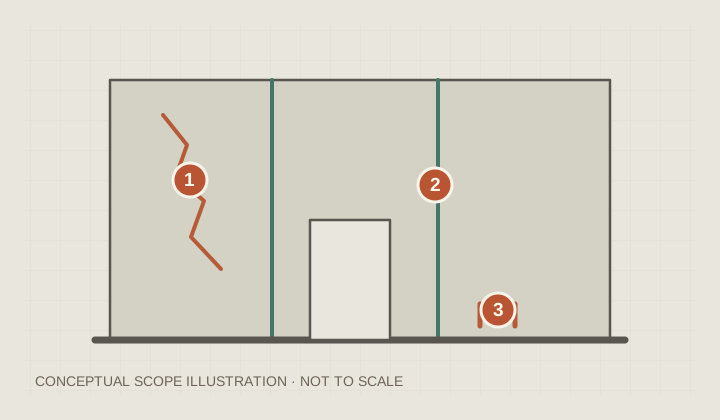
Tilt-up panel repair: A wall-panel elevation identifies a cracked panel area, a panel joint, and a connection area for assessment.
Identify the panel and record cracking, spalling, or previous repairs with photos and reports.
Separate joint or sealant concerns from concrete and structural repair needs.
Provide connection information and engineering assessments. Visible damage alone does not establish the cause.
Conceptual scope illustration, not to scale. Confirm conditions and design with the responsible project professionals.
What should the tilt-up panel repair scope include?
A tilt-up panel repair scope should include the affected panels, assessment findings, repair details, and connection or joint interfaces. Provide panel locations and available building drawings. Distinguish concrete repairs from joint sealants, coatings, and other building-envelope work.
- Work and boundariesMark affected panels and damage locations, including height and access. Share assessment reports, panel details, and connection information available.
- Interfaces and checksClarify concrete repair, reinforcement work, joints, coatings, and weatherproofing boundaries. Assign engineering, access systems, temporary support and access arrangements, and inspection responsibilities.
- Access and operating needsRecord building occupancy, openings that must stay usable, exterior traffic, and access along the wall. Ask how lifting or access equipment, exclusion areas, and weather protection will be coordinated with daily operations.
- Pricing boundariesCompare the same scope for panel height and repair location; access equipment and occupied-site constraints; connection, joint, and coating interfaces; repair quantities and inspection requirements. Ask each bidder to separate exclusions, allowances, and unknown quantities.
Have the project team establish the significance of cracking, movement, or connection issues before choosing the repair. Make the assessment and repair details part of the contractor brief so proposals address the identified condition.
Use the bid request checklistHow can you spot gaps between contractor proposals?
You can spot gaps by comparing each contractor’s response to the same scope. In your private workspace, record proposal details, flag exclusions and allowances, and keep unresolved questions together.
| Check | Example proposal A | Example proposal B | Question to resolve |
|---|---|---|---|
| Panel repair limits | Surface patch areas only | Defined panel and connection repairs from drawings | Confirm which defects and engineered details each proposal addresses. |
| Joints and coatings | Sealants and coatings excluded | Local reinstatement included; full coating separate | Assign joint treatment, weatherproofing, and finish matching. |
| Access and occupancy | Lift access assumed clear | Lift zones and entrance restrictions identified | Agree on access, occupied-building protection, and temporary works. |
| Inspection and handover | Visual finish review only | Specified inspections and repair records listed | Confirm the required checks and who accepts the completed work. |
You enter or import proposal details and review the comparison. The workspace does not interpret uploaded quotes, verify workmanship, or select a contractor for you.
Prepare your contractor requestWhat should you clarify before hiring?
You should clarify relevant experience, the work included, and the responsibilities that affect pricing and scheduling before choosing a contractor.
What experience should you ask contractors to show?
You should ask contractors to show evidence of:
- Repairs to existing tilt-up buildings
- Panel and building-envelope trade coordination
- Work following engineered repair details
Ask who will deliver the work and confirm service area, current capacity, insurance, and project-specific qualifications directly.
Is repairing a panel the same as replacing joint sealant?
Repairing a concrete panel and replacing joint sealant are different scopes, although a project may include both. Identify concrete defects, joint work, and coatings separately and specify the responsibility for interfaces.
Does new tilt-up experience establish repair experience?
New tilt-up construction experience alone does not establish relevant panel repair experience. Working on an existing occupied building brings assessment, access, and repair-detail requirements that a new-build portfolio may not demonstrate.
Further technical readingICRI concrete repair publications ↗
Planning guidance from Concrete Commercial Contractors. Confirm site conditions, design decisions, and applicable requirements with the responsible project professionals.
YOUR NEXT CONTRACTOR CONNECTIONConnect with contractors
Request a coverage checkConnect with contractors
for this work.
Request a coverage review for your service and location, then decide whether to prepare a full request for contractor introductions.